
Plenary Speakers
The UKC Plenary Sessions bring together globally recognized leaders in science, technology, and innovation. Over the years, the plenary stage has hosted Nobel laureates, renowned researchers, and industry pioneers who continue to shape the future of discovery and innovation.

Three days of inspiring keynote sessions featuring globally recognized leaders from academia, industry, and scientific research.
.jpg)
DAY 1 · FIRST DAY
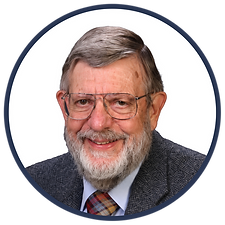
William D. Phillips
Nobel Laureate in Physics
NIST Fellow and Distinguished University Professor, University of Maryland
Dr. William D. Phillips is a Nobel Prize-winning physicist and NIST Fellow at the U.S. National Institute of Standards and Technology (NIST), as well as a Distinguished University Professor of Physics at the University of Maryland. He was awarded the 1997 Nobel Prize in Physics for the development of methods to cool and trap atoms using laser light, a breakthrough that transformed modern atomic physics and quantum science.
Dr. Phillips founded NIST's Laser Cooling and Trapping Group and pioneered techniques that have become fundamental to cold-atom research worldwide. His work has contributed to advances in quantum technologies, precision measurement, and atomic clocks, which serve as the foundation of global timekeeping systems.
Through his scientific discoveries, education, and public engagement, Dr. Phillips continues to inspire new generations of scientists while advancing the frontiers of quantum physics.
A New Measure: the Quantum Reform of the Modern Metric System
The metric system, officially the “International System of Units”, has its roots in the French revolution. Today we have experienced the greatest revolution in measurement since the French revolution. The quantum nature of sub-microscopic atomic matter now provides new definitions of the kilogram, ampere, kelvin, and mole. These quantities are defined by fixing values for the most fundamental quantum constant, Planck's constant; the quantum of electric charge; Boltzmann's constant; and Avogadro's number. I will explain how this is possible, why it was necessary, and speculate about future changes in the SI that may take advantage of features of the Second Quantum Revolution.

DAY 2 · SECOND DAY
Chris A. Malachowsky
Co-Founder and Fellow, NVIDIA
Chris Malachowsky founded NVIDIA in 1993 and has more than 30 years of industry experience. He serves as a member of the executive staff and a senior technology executive for the company.
Malachowsky has been instrumental in managing, defining and driving the company's core technologies as it has grown from a startup to the global leader in visual and parallel computing. As an executive at NVIDIA, he has led numerous functions, including IT, operations and all facets of the company's product engineering. Most recently, he was responsible for NVIDIA's world-class research organization, which is chartered with developing the strategic technologies that will help drive the company's future growth and success. Prior to NVIDIA, Malachowsky held engineering and technical leadership positions at HP and Sun Microsystems. A recognized authority on integrated-circuit design and methodology, he has authored close to 40 patents. He holds a BSEE degree from the University of Florida and an MSCS degree from Santa Clara University. Both schools have honored Malachowsky with Distinguished Alumnus awards.
Malachowsky serves on the boards of the Computer History Museum and Hiller Aviation Museum, in Silicon Valley, and the Los Angeles County Museum of Art's Art & Technology Lab. Beyond his technical accomplishments, Malachowsky has also received an Emmy for a film he helped produce that won Best Documentary in 2009.
Expanding Access, Building the Future
AI FOR GOOD
AI is a foundational shift, not just another tool — as consequential as electricity, as transformative as the internet; we are still in the earliest innings. What happens to this country if most Americans never get a real chance to participate in the AI era?
The UF experiment as proof of concept — every department, every discipline, not just technical majors had AI across every curriculum. Scaling the model: the “New Frontier” 50-State Compute Initiative. AI's potential in science at the intersection of disciplines — AI + medicine, climate science, materials science; breakthroughs will come from interdisciplinary convergence, and universities are where that happens.
GOOD FOR AI
AI as a once-in-a-generation chance to rebuild and expand opportunity, not just for the privileged few. Good AI doesn't happen by accident — it requires the right people, structures, and commitments. Industry + Government + Academia working together (SCSP Taskforce on the Future of Work; state AI institutes; university partnerships).
Diverse, global talent is what makes AI good — the AI era will fail if it only draws from a narrow slice of humanity. Korean-American scientists and engineers represent exactly the cross-disciplinary, globally-connected profile the field needs. Korea's indispensable role in AI infrastructure — HBM memory, advanced semiconductor packaging; US–Korea R&D collaboration is not peripheral, it's load-bearing. What “good” means for AI policy: accessible, equitable, shaped by people who understand both the technology and its human implications.
The Question Worth Asking
What happens when everyone has the tools to think bigger, build faster, and solve problems we used to think were out of reach? That's the actual race. You don't win it by restricting access — you win it by expanding it. The next breakthroughs will come from rooms like this one. Call to action: be the builders, the bridges, the curious ones — there's more to build, more states to reach, more students to empower.

DAY 3 · THIRD DAY
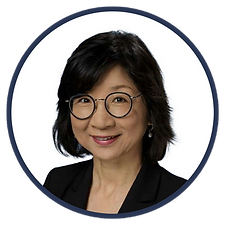
Ji-Hyun Lee
Professor, Department of Biostatistics, University of Florida
Associate Director and Division Director for Cancer Quantitative Sciences, University of Florida Health Cancer Institute
Dr. Ji-Hyun Lee is a cancer biostatistician whose research focuses on clinical trials, cancer prevention and treatment, immunotherapy, artificial intelligence, and the analysis of large-scale health data. She has authored more than 210 peer-reviewed publications and provides statistical leadership for numerous federally funded cancer research projects.
In 2025, Dr. Lee served as the 120th President of the American Statistical Association, becoming the first Korean-American and first East Asian to hold the position in the organization's history. She also established the first Statistical Advisory Panel at Nature Medicine to strengthen methodological rigor and reproducibility in biomedical research.
Through her research, leadership, and mentoring, Dr. Lee advances the role of statistics and data science in improving human health and supporting evidence-based decision making.
Food, Medicine, and Belief: Scientific Evidence in the Age of Uncertainty
As a biostatistician working in cancer research, I have spent much of my career studying how evidence shapes medical decisions when the stakes are high. In this talk, I will share examples from my own research to illustrate how modern science navigates uncertainty, belief, hope, and rapidly evolving data. I will discuss a randomized clinical trial evaluating neutropenic diets in patients with blood cancer, observational studies examining ivermectin and cancer outcomes using large-scale electronic health records, and ongoing work on mRNA-based cancer vaccines and immunotherapy.
I will also reflect on how data science, AI, and large-scale health data are creating new opportunities (and new challenges) for generating and interpreting medical evidence. As scientific information becomes easier to produce, questions about causation, uncertainty, and human judgment may become even more important. Ultimately, the goal of science is not simply to generate more data, but to help people understand what the evidence truly shows.